How to Improve Search Rankings for US Small and Medium Businesses
If you run a small or medium business in the US, showing up in Google is one of the easiest ways to get in front of people already looking for your service. But many businesses publish a website, add a few pages, and then wonder why rankings never move.
Usually, the problem is not one big issue. It is a mix of weak keyword targeting, thin content, technical gaps, and no clear SEO plan.
The good news is that search visibility can improve when you fix the basics and stay consistent. You do not need tricks. You need a website that matches buyer intent and gives Google clear signals about what each page is about.
Why search rankings matter for US businesses
Strong rankings bring in people with intent. These are visitors who are searching for answers, providers, or solutions right now. That is why a strong organic search ranking can become one of the most valuable growth channels for a business.
Better rankings can lead to more qualified traffic, lower dependence on paid ads, stronger trust, and more calls or form fills. For most businesses, that is far more useful than random traffic.
How to rank higher in search US markets by starting with keyword research
Good SEO starts with keyword research strategies based on what buyers actually type into Google.
Many businesses target broad terms that are too competitive or too vague. A better approach is to focus on service terms, problem based searches, and location phrases where relevant. For example, a local service business may do better targeting “commercial electrician in Dallas” than just “electrician.”
A simple process is to:
- list your main services
- write down customer questions
- add city or state terms if location matters
- review what competitors rank for
- map one keyword theme to each core page
This helps improve Google rankings US businesses care about because every page has a clearer purpose
SEO best practices for on-page SEO and content optimization
Once you know the right keywords, the next step is on-page SEO. This means improving the page itself so it is useful, clear, and easy to understand.
A strong page usually has:
- a clear title and heading
- useful copy written around one topic
- simple structure with subheadings
- internal links to related pages
- a clear call to action
- enough depth to answer the visitor’s question
Content optimization is not about stuffing keywords everywhere. It is about making the page more relevant and more helpful. If you want website ranking improvement US search results reward, your content has to feel written for real people first.
Technical SEO and website optimization still matter
Great content can still struggle if the site is slow, messy, or hard to crawl.
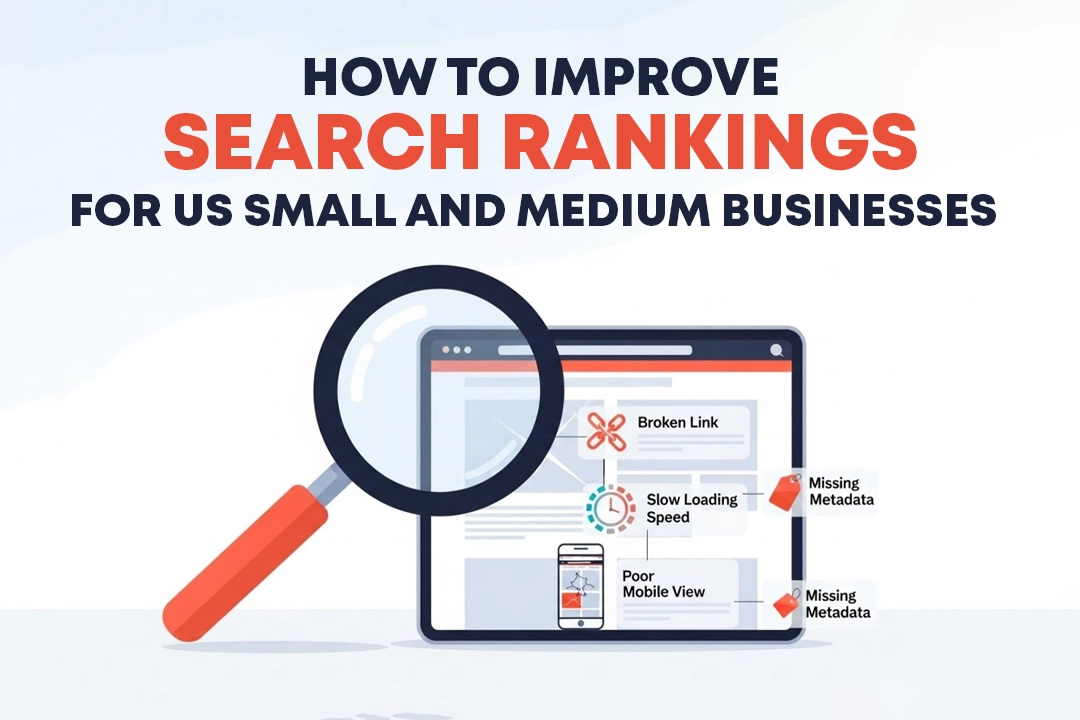
Technical SEO covers the foundations that help search engines and visitors use your website properly. Key areas include page speed, mobile performance, secure pages, clean navigation, proper indexing, and fixing broken links or errors.
For many businesses, technical SEO is not about doing something advanced. It is about removing the small issues that quietly hold back growth.
Off-page SEO and link building techniques that build authority
Google also looks at trust signals beyond your website. This is where off-page SEO matters.
Backlinks, reviews, brand mentions, and directory listings can all support authority when they are relevant and credible. Good link building techniques focus on quality, not volume.
Useful ways to build authority include:
- earning links from local or industry directories
- getting mentioned by partners or associations
- publishing helpful content people want to reference
- improving your review process if local search matters
This supports search engine ranking strategies US businesses can sustain over time.
Best practices to increase search visibility US businesses can maintain
Search visibility improves when SEO becomes part of your regular marketing rhythm.
A practical routine might include updating service pages, publishing helpful blog content, refreshing older pages, and reviewing search performance each month. Small, steady improvements usually work better than one big burst of activity.
This is how organic traffic growth tips US business owners can actually use start to turn into results.
How to monitor website ranking improvement US businesses care about
You do not need complicated reporting to track progress. Start with:
- rankings for important keywords
- organic traffic to service pages and blogs
- click through rate from search
- calls, forms, or bookings from organic traffic
These numbers show whether your SEO ranking optimization US efforts are bringing in better visibility and real business value.
Conclusion
If you want to know how to improve search rankings, keep it simple. Start with the pages that matter most. Match them to real buyer searches. Improve on-page SEO, fix technical issues, build trust over time, and measure what turns into leads.
For most US small and medium businesses, better rankings come from doing the right things consistently, not from chasing shortcuts.
FAQs
Focus on the basics first: keyword targeting, stronger page content, internal links, technical fixes, and trust signals such as backlinks and reviews. Most businesses get better results by improving core pages before trying to optimize the whole site.
Some on-page and technical improvements can help within weeks, but stronger SEO gains usually take a few months. Timing depends on competition, website quality, and how consistent the work is.
On-page SEO covers what is on your site, such as titles, content, headings, and internal links. Off-page SEO covers trust signals outside your site, such as backlinks, reviews, and mentions.
Keyword research helps you target the exact phrases your customers use. That makes your pages more relevant, improves search visibility, and often brings in higher intent traffic.
Use Google Search Console, Google Analytics, and a simple keyword tracker. Watch rankings, traffic, and leads from organic search so you can connect SEO work to business outcomes.