Maximizing ROI with PPC Advertising

Maximizing ROI with PPC Advertising In today’s fast-paced digital environment, businesses want results — not just activity. Pay-Per-Click (PPC) advertising offers one of the fastest ways to generate traffic, leads, and sales. But while launching ads is easy, achieving a strong return on investment (ROI) is where most businesses struggle. Many campaigns burn budgets without delivering meaningful outcomes. The difference lies in this:PPC should not be treated as ad management — it should be treated as a performance-driven growth system. What Does ROI in PPC Actually Mean? ROI (Return on Investment) in PPC measures how effectively your ad spend translates into business results. It’s not just about clicks or impressions. True ROI focuses on: A successful PPC campaign ensures that every dollar spent contributes to measurable business growth. Why Many PPC Campaigns Fail Despite investing in ads, many businesses see poor returns due to: This results in: PPC becomes expensive when it is managed tactically instead of strategically. The Foundation of High-ROI PPC Campaigns To maximize ROI, PPC must be built on a strong foundation. 1. Clear Business Goals Every campaign should start with a clear objective: Without defined goals, it becomes impossible to measure success or optimize performance. 2. Audience Targeting & Intent High-performing campaigns focus on reaching users who are: This includes: Better targeting = better lead quality. 3. Compelling Ad Copy Your ad is the first interaction with potential customers. Effective ads: Instead of generic messaging, focus on: 4. Conversion-Focused Landing Pages Driving traffic is only half the equation — conversion happens on the landing page. A high-performing landing page includes: If the landing page is weak, even the best ads will fail. 5. Tracking & Data Accuracy Without proper tracking, you are making decisions blindly. A strong PPC setup tracks: This allows you to: Strategies to Maximize PPC ROI 1. Focus on High-Intent Keywords Instead of targeting broad terms, prioritize: These attract users who are closer to taking action. 2. Use A/B Testing Testing is essential for improvement. Test variations of: Small improvements can significantly increase conversion rates. 3. Optimize Budget Allocation Not all campaigns perform equally. A strategic approach: This ensures your budget is used efficiently. 4. Leverage Remarketing Most users do not convert on the first visit. Remarketing helps you: It’s one of the most cost-effective PPC strategies. 5. Improve Quality Score (Google Ads) Quality Score affects both cost and performance. It depends on: Higher Quality Score = lower costs and better results. 6. Align Ads with the Funnel Different users are at different stages: Top of FunnelAwareness campaigns Middle of FunnelConsideration and comparison Bottom of FunnelConversion-focused campaigns Aligning ads with the user journey improves effectiveness. The Role of Data in PPC Optimization Data is the backbone of high-performing campaigns. Regular analysis helps you: Instead of guessing, decisions are based on real performance insights. PPC and Long-Term Growth While PPC delivers quick results, it should also support long-term growth. A strategic approach ensures: When combined with SEO and content, PPC becomes part of a complete growth system. Common PPC Mistakes to Avoid To improve ROI, avoid: These mistakes turn PPC into a cost instead of an investment. What Changes with a Strategic PPC Approach When PPC is done correctly, businesses experience: Instead of wasting budget, every campaign contributes to measurable outcomes. Final Thoughts PPC advertising is one of the most powerful tools for growth — but only when managed strategically. It is not about running ads.It is about building a system that connects targeting, messaging, user experience, and data. When all elements work together, PPC becomes a reliable and scalable growth engine.
How to Improve Search Rankings for US Small and Medium Businesses
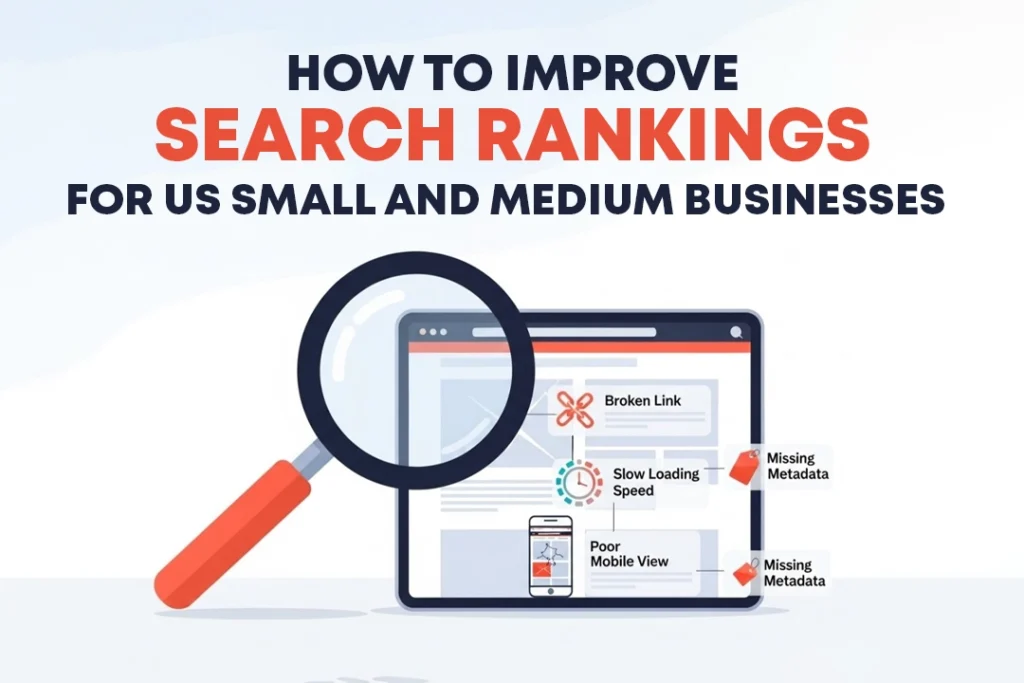
If you run a small or medium business in the US, showing up in Google is one of the easiest ways to get in front of people already looking for your service.