
Data-Driven Marketing: Turning Insights into Action

Data-Driven Marketing: Turning Insights into Action In today’s digital landscape, businesses have access to more data than ever before.Every click, visit, interaction, and conversion generates valuable information. Yet, many businesses still struggle to achieve consistent growth. Why? Because data alone does not create results — action does. Data-driven marketing is not just about collecting numbers.It’s about using insights to make smarter decisions, improve performance, and drive measurable business outcomes. What Is Data-Driven Marketing? Data-driven marketing is the practice of using real data to: Instead of relying on assumptions or guesswork, decisions are based on actual performance insights. Why Data Alone Is Not Enough Many businesses track data but fail to use it effectively. Common issues include: The result?Activity without improvement. To create impact, data must be translated into clear, strategic actions. The Shift: From Reporting to Decision-Making Traditional marketing often focuses on reporting: But modern marketing focuses on: The goal is not to collect data — it’s to make better decisions that drive growth. Key Components of Data-Driven Marketing 1. Clear Tracking & Measurement Setup Everything starts with accurate data. You need to track: Without proper tracking, your insights will be incomplete or misleading. 2. Defining Meaningful Metrics Not all metrics matter. Focus on: These metrics are directly linked to business performance. 3. Understanding User Behavior Data helps you answer critical questions: This understanding allows you to improve the user experience and increase results. 4. Continuous Testing & Optimization Data-driven marketing is an ongoing process. This includes: Each test provides insights that lead to better performance over time. 5. Aligning Data with Strategy Data should support your overall growth strategy. This means: Without alignment, data becomes disconnected from real outcomes. Turning Insights into Action Collecting data is only the first step. The real value comes from applying it. Here’s how to turn insights into results: 1. Identify What’s Working Focus on: Then scale these elements. 2. Fix What’s Not Working Look for: Then optimize or replace them. 3. Improve the Conversion Funnel Analyze the full journey: Identify leaks in the funnel and fix them. 4. Optimize Budget Allocation Shift budget toward: Reduce spend on underperforming areas. 5. Refine Targeting & Messaging Use data to: This leads to higher engagement and better conversion rates. Benefits of Data-Driven Marketing When implemented correctly, data-driven marketing delivers: 1. Better Decision-Making You rely on facts, not assumptions. 2. Improved ROI Resources are allocated more efficiently. 3. Higher Conversion Rates User experience and messaging are optimized. 4. Reduced Waste Ineffective strategies are quickly identified and removed. 5. Scalable Growth Successful strategies can be expanded with confidence. Common Mistakes to Avoid To get the most out of data-driven marketing, avoid: These mistakes limit the effectiveness of your strategy. Data-Driven Marketing in Action A typical transformation looks like this: Before: After: The difference is not more activity — it’s better decisions. The Role of Data in a Growth System Data connects every part of your marketing: Together, these create a cohesive and scalable growth system. Final Thoughts Data-driven marketing is not about collecting more information.It’s about using the right data to take the right actions. When insights are applied strategically, marketing becomes: Instead of guessing what works, you build a system based on clarity, performance, and continuous improvement.
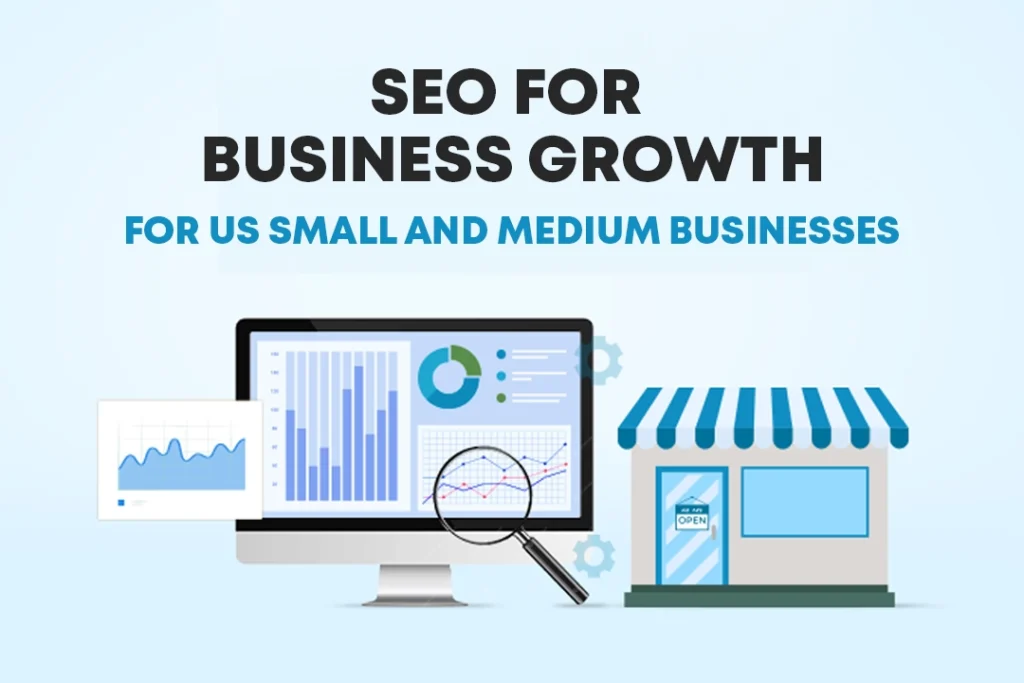
SEO for Business Growth for US Small and Medium Businesses
In today’s digital environment, visibility alone is no longer enough.